Public Counsel provides free direct legal services and support or matches clients with pro bono advocates, ensuring they have a partner standing with them, their families, and our communities as they pursue justice.
Public Counsel addresses the root causes of inequities in our society by advocating for inclusive policy solutions in collaboration with grassroots coalitions and the communities most impacted by systemic oppression.
Public Counsel files strategic impact litigation so entire communities get the justice they deserve. By setting legal precedents and challenging unjust laws, our cases spark large-scale change in our society.
Since its inception, Public Counsel has relied on pro bono attorneys, law students, paralegals, and other legal professionals to partner with us in supporting clients, taking on high-impact cases, and strengthening our advocacy efforts.
Public Counsel values an interdisciplinary approach to law and social work that strengthens trauma-informed legal advocacy and advances effective outcomes across its work.
Public Counsel promotes healthy and resilient communities through education and outreach, providing trainings, legal resources, and practical guidance that help people understand their rights, navigate complex systems, and take informed action.
The Trauma-Informed Deposition Guide integrates social work values into legal practices in an attempt to reduce negative impacts on youth clients during deposition. The intention of this guide is to...
This FAQ is designed for small business owners and nonprofit organizations nationwide that received an SBA COVID-19 EIDL and are now navigating repayment, delinquency, or default. It covers program basics,...
This guide provides an overview of the California judicial foreclosure process for primary (first lien) mortgages, covering the full timeline from pre-foreclosure through the foreclosure sale — a minimum of approximately...
Public Counsel provides free direct legal services and support or matches clients with pro bono advocates, ensuring they have a partner standing with them, their families, and our communities as they pursue justice.
Public Counsel addresses the root causes of inequities in our society by advocating for inclusive policy solutions in collaboration with grassroots coalitions and the communities most impacted by systemic oppression.
Public Counsel files strategic impact litigation so entire communities get the justice they deserve. By setting legal precedents and challenging unjust laws, our cases spark large-scale change in our society.
Since its inception, Public Counsel has relied on pro bono attorneys, law students, paralegals, and other legal professionals to partner with us in supporting clients, taking on high-impact cases, and strengthening our advocacy efforts.
Public Counsel values an interdisciplinary approach to law and social work that strengthens trauma-informed legal advocacy and advances effective outcomes across its work.
Public Counsel promotes healthy and resilient communities through education and outreach, providing trainings, legal resources, and practical guidance that help people understand their rights, navigate complex systems, and take informed action.
The Trauma-Informed Deposition Guide integrates social work values into legal practices in an attempt to reduce negative impacts on youth clients during deposition. The intention of this guide is to...
This FAQ is designed for small business owners and nonprofit organizations nationwide that received an SBA COVID-19 EIDL and are now navigating repayment, delinquency, or default. It covers program basics,...
This guide provides an overview of the California judicial foreclosure process for primary (first lien) mortgages, covering the full timeline from pre-foreclosure through the foreclosure sale — a minimum of approximately...
As a child care provider, you are not only a business person but you are a key member of the community in which you work and live. This means that you must have a good working relationship with parents, neighbors, landlords and licensing personnel. In fact, most problems involving the law can be avoided by simply maintaining good relationships with other members of the community.
As a child care provider, you may encounter situations where you suspect or know that a child in your care is being abused or neglected. When situations like this arise, you must follow appropriate procedures to ensure that the child gets help and that you are complying with legal requirements.
Assisting family child care providers (“FCCPs”) with their tax returns generally raises the same issues as for all other home-based businesses, like proper proof of income and expense, separation of business and personal expenses, etc. The IRS and Congress have provided special rules for FCCPs, thereby recognizing the difficulty of separating personal expenses from business expenses in a family child care setting.
Neighbor disputes arise for a variety of reasons, some of which may relate to your child care business. As a family child care home provider you have several options for addressing these disputes or harassment that may include insults or obscenities directed at you, your family, your helpers, your parents, or even the children in your care, actions impeding the use of your home as a business, reporting you to Licensing, and other similar acts.
California State law requires individuals, partnerships and corporations to register a “Fictitious Business Name” (commonly known as a DBA – “doing business as”) if they operate a business and/or collect money under a name different from their legal surname(s) or corporation names.
License-exempt child care is child care that can operate legally without a license. While certain child care arrangements may qualify as license-exempt child care, there are policies and procedures that a license-exempt child care provider should follow in order to ensure the successful operation of his/her child care business and avoid potential legal problems.
Before admitting a child into a child care program, generally a child care provider must request proof that the child has been immunized against diseases. However, there are certain exceptions to this proof of immunization requirement. Further, a new law effective September 1, 2016, added requirements for the licensee of a family child care, employees and volunteers.
As a child care provider, you have a legal obligation to protect and care for each child in your care. This obligation encompasses who you release a child in your care to and under what circumstances you release a child. Releasing a child to an unauthorized individual could pose legal problems for a child care provider and result in revocation of a provider’s child care license.
During the operation of your child care business, complaints made be made to Community Care Licensing (“Licensing”) about your program. This publication is intended to provide basic information on Licensing’s investigation of complaints, how Licensing decides whether to issue a citation against your facility, and how you can appeal a citation that you do not agree with.
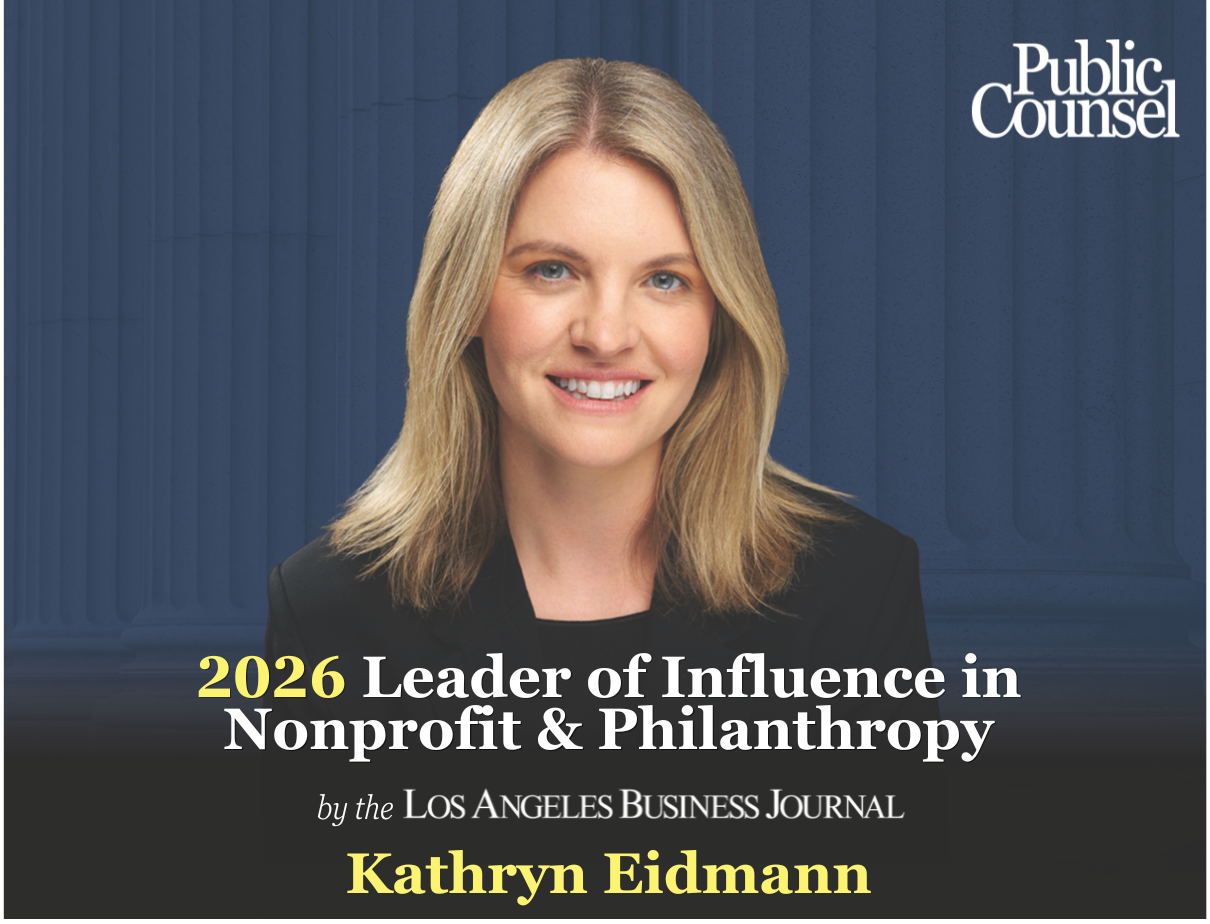
“I have been a colleague and co-counsel with Kathryn for over a decade,” said Mark Rosenbaum, Senior Special Counsel for Strategic Litigation at Public Counsel. “By her experience and vision, she is uniquely qualified to lead Public Counsel to end the disparities created by poverty and racism that divide Los Angeles and California into communities of haves and have-nots. Kathryn is the most brilliant and innovative strategist I have worked with in over a half-century of practice. With her leadership, Public Counsel will be to economic liberties and rights what the ACLU is to civil liberties and rights.”
Judy Verduzco
“I’m delighted to welcome Kathryn as our new President and CEO,” said Judy Verduzco, director of social work at Public Counsel. “Kathryn deeply appreciates the unique skillsets that social workers bring to our legal practice, which build our capacity to embed trauma-informed principles in our work, benefiting both our clients and staff. She is committed to sustaining and growing our interdisciplinary advocacy model in order to continue delivering holistic and effective legal services. Kathryn also recognizes the impact of compassion fatigue, secondary trauma, and burnout on staff. Public Counsel has prioritized staff wellness, offering activities such as full-day wellness retreats, guided mindfulness and meditation classes, and virtual yoga classes. Kathryn is committed to fostering a healthy workplace for all by supporting activities that promote staff wellness and working toward building a comprehensive framework for workplace wellness across the organization.”
Roman Silberfeld
“As a longtime Public Counsel supporter, I couldn’t be more excited about the choice of our new leader, Kathryn Eidmann,” said Roman Silberfeld, a partner at Robins Kaplan LLC and past Chair of the Board. “Kathryn will ably fill the shoes of our distinguished past CEOs, and, more than that, she will without any doubt exceed the accomplishments of her predecessors because of the unique qualities that she brings to her new role. Most notably, Kathryn is an excellent lawyer who has guided many of the important and groundbreaking cases that Public Counsel has brought. And, great leadership is most often exemplified by setting a great example for those whom one has the privilege to lead. Kathryn will, and always has, set a great example of being a person of high moral values, of distinguished service, and of great vision about the important issues of our time that affect the communities that we serve. Kathryn has always been a voice for those communities and, as CEO, will surely make even greater strides to deliver justice, hope, and opportunity.”
David Johnson
“I couldn’t be more excited about Kathryn’s selection as Public Counsel’s new president and CEO,” said David Johnson, founder of Act 4 Entertainment and past Chair of the Board. “Kathryn is a brilliant and dedicated lawyer who has been instrumental in achieving groundbreaking victories across multiple aspects of our work. Kathryn has had an extraordinary focus on a number of areas, particularly education. She understands the importance of integrated litigation, communications, movement building, and advocacy strategies. Kathryn is deeply respected by our supporters, board, staff, and community, and she is a thoughtful and inspiring leader. Additionally, she has been actively involved in civic life, including serving as vice president of the library board. Kathryn is not only a great professional but also a great friend. At this point in our country’s history, Public Counsel’s impact is critically important. I am delighted that, after an extensive search, we have selected one of our own. Kathryn Eidmann is an extraordinary advocate for civil and economic rights and will drive positive change for our community and for our country.”
Bruce Cormicle
“Kathryn knows what is right and what is just. Even more importantly — she knows how to achieve it,” said Bruce Cormicle, secretary of the Board and owner of his own law firm. “A brilliant strategist – she sees moves and outcomes well in advance. I’ve seen her argue a case in the Ninth Circuit with unparalleled command, control, and charm. Kathryn’s authenticity and passion for public interest work shine through in everything she does. She is a natural leader who brings people together effortlessly and will hit the ground running on day one. It is a spectacular moment for Public Counsel and for the clients that we serve.”